






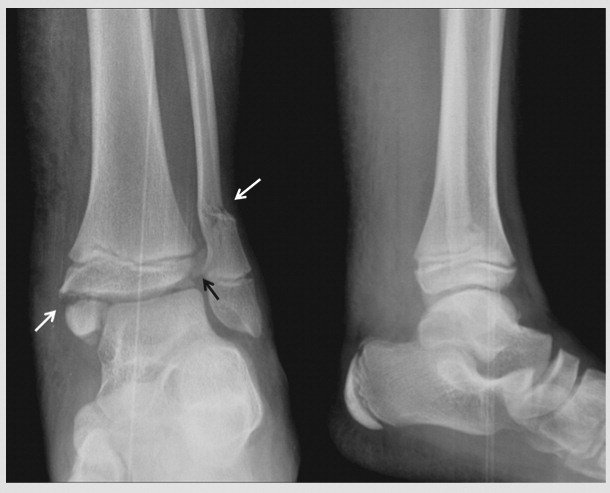
The ankle supports the full weight of the body with every step. An ankle fracture occurs when one or more of the bones that form this joint break, affecting people of all ages and activity levels. They can result from an event as routine as missing a step on a staircase or as sudden as a vehicle collision. A fracture shares several signs with a sprain, so people may be uncertain about the nature of their injury. Learning how ankle fractures occur, what signs they produce, and how they are commonly managed can help you recognize when to seek a professional evaluation.
What Is an Ankle Fracture?
The ankle joint forms where three bones meet. These are the tibia, the fibula, and the talus, which refers to a small bone that rests above the heel bone. An ankle fracture may involve one of these areas or several at once. Ankle fractures frequently result from rolling or twisting the foot, falls, or direct blows to the joint. Some fractures are small cracks in the bone, and others cause bone fragments to shift out of their normal position. The ligaments surrounding the joint can also be damaged during the same injury.
How Is a Fracture Detected?
Signs of an ankle fracture often appear right after the injury occurs. Some people are able to walk after a fracture, and this may lead them to assume the injury is only a sprain. Because the two conditions can look alike, a professional evaluation helps clarify what has occurred. Symptoms that indicate care should be sought include:
- Pain at the site of the injury
- Tenderness when the area is touched
- Difficulty or inability to bear weight
- Swelling around the ankle or lower leg
- Bruising around the ankle
- Change in the shape or alignment of the ankle that is visible
During an appointment, a podiatrist may ask how the injury happened. They can also examine the foot and ankle directly. X-rays taken from several angles are commonly used to confirm whether a bone is broken, and they may show the position of any fragments.
How Is One Treated?
Treatment depends on several factors, including the location and severity of the fracture. Elevating the leg and applying ice can help manage swelling during the early stages of recovery. Stable fractures, in which the bones remain properly aligned, may be managed without surgery. Nonsurgical care can involve a walking boot to protect the ankle as the bone heals. Patients are advised to limit weight on the injured foot; they may also have to use crutches for a period of time. Follow-up X-rays allow the provider to monitor healing and confirm that the bones stay in position.
Fractures that are unstable or in which the bones have shifted can require surgery. During this procedure, a surgeon realigns the bone fragments and secures them with hardware. A period of immobilization usually follows. Broken bones often take weeks to heal, and the surrounding soft tissues can need additional time. Physical therapy may be recommended to help restore strength, flexibility, and balance. Patients typically return to normal activities gradually and as directed by their provider.
Confer With a Podiatrist
Preventive measures may lower the likelihood of future injuries. Wearing supportive footwear suited to each activity, as well as performing exercises that build ankle strength and balance, can contribute to joint stability. If you have injured your ankle or have ongoing pain after a previous fracture, a podiatrist is able to evaluate the area, and they may recommend appropriate next steps.