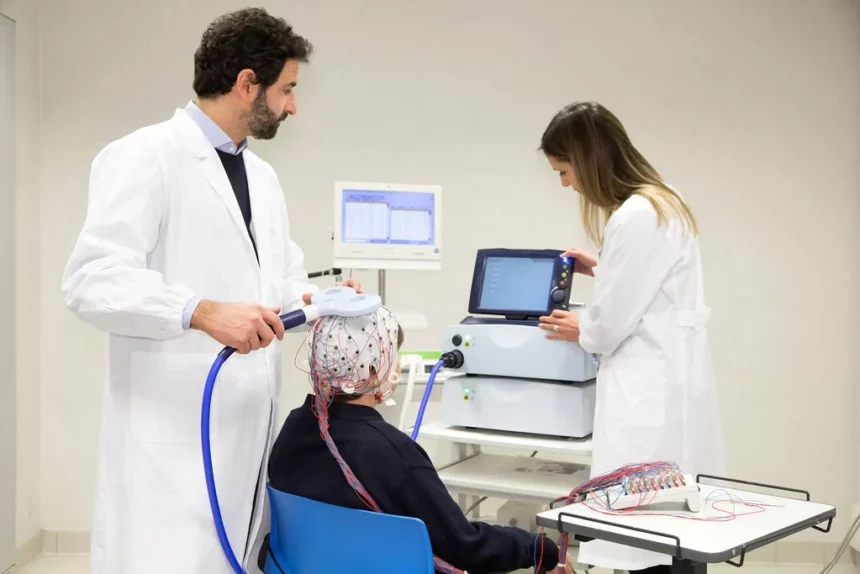
After trying traditional pain management methods, transcranial magnetic stimulation (TMS) offers a different approach for spine and orthopedic patients. TMS works on the brain instead of the spine or joints, and it requires no surgery or anesthesia. TMS uses magnetic fields to safely stimulate specific regions of the brain, which can influence how your body processes pain signals. This is how each step of the process works in plain terms:
Delivering Magnetic Pulses
A TMS session starts with a magnetic coil placed against your scalp. The coil sits over a specific brain region, and a device sends brief magnetic pulses through it. To begin, your care team selects the target area after they review your pain history and symptoms.
The pulses pass through the skull without contact, and they produce a clicking or tapping sound. Patients can bring earplugs because the noise reaches a noticeable volume. While you stay awake and alert, the pulses feel like light tapping on the head.
When the session ends, you may drive yourself home and return to daily tasks. A typical session is over quickly. Patients may feel mild scalp discomfort, but this sensation fades within a few sessions. Treatment plans typically include multiple sessions over several weeks.
Stimulating Nerve Cells
Magnetic pulses create small electrical currents in the brain tissue beneath the coil. These currents activate nerve cells, which then send signals to connected brain areas. Some pain modalities target the motor cortex, but others aim for other regions linked to pain. Research suggests several possible effects useful for pain management:
- Changes in how often nerve cells fire
- Stronger or weaker connections between brain regions
- Shifts in chemical messengers
Changing Pain Processing and Perception
Chronic pain may cause changes in the brain over time, and these changes may keep pain signals active. Pain may continue after an injury heals because the nervous system stays on high alert. Rather than at the injury site, TMS targets this pattern at the brain level.
Repeated TMS sessions aim to adjust the activity of the brain networks that process pain. The motor cortex links to the thalamus and other pain centers, and stimulation may calm their activity. These pathways have been explored in patients with back pain, nerve pain, and fibromyalgia. The response differs from person to person.
Reducing Pain
While research on TMS for pain continues, some doctors use it to lower pain in multiple sessions. Results vary widely between patients and conditions. You may notice changes after several sessions, and others notice little or no change. Your provider may track your progress with these measures:
- Pain intensity ratings on a 0 to 10 scale
- Sleep quality and daily activity levels
- Use of pain medications
- Ability to perform work or household tasks
Schedule a TMS Therapy Session
TMS does not replace every spine or orthopedic treatment, but it may fit into a broader care plan. Before you start, a provider will review your medical history, medications, and current treatments. Some conditions, such as metal implants in the head or a history of seizures, may rule out TMS. Contact a spine and orthopedic clinic today to schedule an evaluation and talk through your treatment options.