






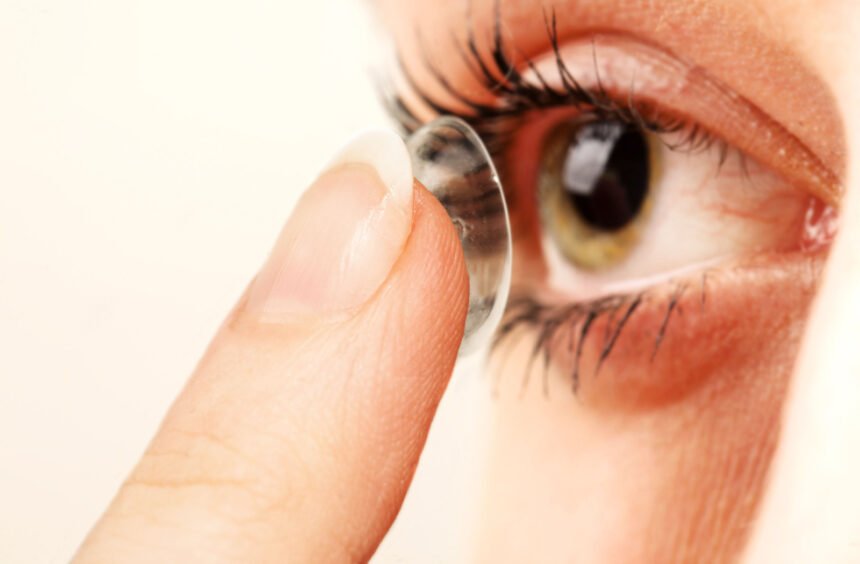
Contact lenses are an alternative to eyeglasses for vision correction; many individuals wear them to manage refractive errors, including nearsightedness (myopia), farsightedness (hyperopia), and astigmatism. Before an optometrist prescribes contacts, they will assess the patient’s eye health and determine the most appropriate lens type. Understanding the types available helps patients make informed decisions about their care.
What Are Contacts?
Contact lenses are thin, curved discs placed directly on the surface of the eye. They correct vision by refracting light onto the retina, which compensates for irregularities in the eye’s shape. Unlike eyeglasses, contacts move naturally with the eye, and this provides a wider field of corrected vision. An optometrist prescribes and fits them based on each patient’s unique eye measurements, matching the lens type to the individual’s specific visual needs.
Who Do They Help?
Contact lenses suit a wide range of patients with refractive errors, conditions in which the eye does not bend light correctly. These patient groups include:
- Nearsighted patients (myopia): Difficulty seeing objects at a distance
- Farsighted patients (hyperopia): Difficulty seeing objects up close
- Patients with astigmatism: An irregularly shaped cornea that affects overall visual clarity
- Patients with presbyopia: Age-related changes in near vision that can be addressed with specialized lens designs
What Are the Different Types?
Contact lenses are broadly categorized by their material, replacement schedule, and design. Each category serves a specific clinical purpose, and understanding these distinctions helps determine the most appropriate lens for a patient’s needs. Soft lenses are made from flexible, water-containing plastics that conform to the eye’s shape. Rigid gas-permeable (RGP) lenses are firmer, and they allow more oxygen to reach the eye, which may provide sharper vision for patients with astigmatism.


Replacement schedules vary based on clinical needs, and each schedule carries its own advantages. Daily disposables are worn once and discarded. Because daily disposal eliminates protein buildup, it may reduce the risk of infection. Extended wear lenses are designed for continuous wear over several days or nights.
How Are Vision Needs Met?
Optometrists prescribe contact lenses based on a patient’s specific refractive error, lifestyle, and eye health. Spherical lenses correct nearsightedness and farsightedness, and they achieve this by adding or reducing the eye’s focusing power. Toric lenses are shaped to correct astigmatism because the cornea presents different curvatures that standard lenses cannot address. Multifocal lenses incorporate multiple prescription zones into a single lens, allowing patients to see clearly at varying distances, which makes them suitable for those with presbyopia.
Meeting vision needs through appropriate correction offers measurable benefits across daily functioning and long-term eye health. Accurate vision correction helps reduce eye strain and fatigue, which are common consequences of uncorrected refractive errors. Patients with properly fitted lenses may report improved performance in visually demanding tasks; these tasks include reading, driving, and screen-based work. A comprehensive clinical evaluation makes sure that the selected correction method aligns with the patient’s corneal health, tear film quality, and daily demands.
Visit an Optometrist
Contact lenses provide an effective option for correcting a broad range of vision conditions; from daily soft lenses to specialty designs, the variety available means that many patients can find a lens suited to their needs and lifestyle. Schedule a comprehensive eye exam with a licensed optometrist to determine which contact lens type fits your needs. An optometrist will measure your corneal curvature, and they may evaluate your overall eye health before recommending a lens.