





When we think about home appliances, we usually think about convenience, not health. But a refrigerator or dishwasher that isn’t working properly can quietly become a source of real health risks for you and your family. From bacterial growth to poor air quality, appliance malfunctions often go unnoticed until they start affecting more than just your daily routine.
Refrigerator Issues and Food Safety
Your refrigerator’s primary job is to keep food at a safe temperature, typically below 40°F (4°C), to slow bacterial growth. When a refrigerator starts malfunctioning, even slightly, that safety margin can disappear fast.
Common warning signs include:
- Food spoiling faster than usual
- Ice buildup in the freezer, which can signal poor sealing
- Warm spots inside the fridge
- Unusual humming or cycling sounds from the compressor
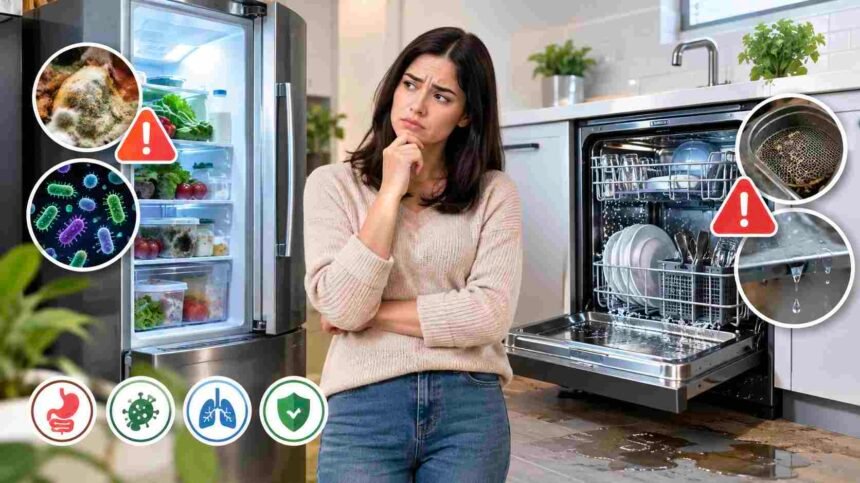
A refrigerator running just a few degrees too warm can allow bacteria like Listeria, Salmonella, and E. coli to multiply on stored food, increasing the risk of foodborne illness, often without any obvious sign that something is wrong until someone gets sick.


Dishwashers and Hidden Bacteria Growth
Dishwashers are designed to sanitize, but a malfunctioning unit can do the opposite. When water doesn’t reach the proper temperature, or drainage systems become clogged, dishwashers can become breeding grounds for mold, mildew, and bacteria rather than eliminating them.
Health-related warning signs include:
- A musty or sour smell coming from the appliance
- Visible residue or film left on “clean” dishes
- Standing water at the bottom of the unit after a cycle
- Black or pink mold around door seals
Studies on household dishwashers have found that malfunctioning units with poor drainage or inadequate heat can harbor mold species and bacteria that may pose particular risks for individuals with weakened immune systems, allergies, or respiratory sensitivities.
Air Quality and Mold Concerns
Beyond food safety, both refrigerators and dishwashers can contribute to indoor air quality issues when they malfunction. Trapped moisture from a leaking dishwasher or a refrigerator with a failing door seal creates the perfect environment for mold growth, not just inside the appliance, but in surrounding cabinetry and flooring. Over time, this can lead to musty odors, allergy flare-ups, and in more serious cases, respiratory irritation for sensitive household members.
Prevention Starts With Awareness
The good news is that most of these health risks are preventable with routine attention:
- Check refrigerator temperatures periodically with a simple thermometer
- Clean dishwasher filters and door seals regularly
- Address unusual smells or leaks immediately rather than waiting
- Schedule professional inspections before small issues turn into larger ones
Because these appliances directly affect food safety and indoor air quality, timely repairs matter more than many homeowners realize. When something feels off, a smell, a sound, a temperature that doesn’t seem right, it’s worth having it checked rather than assuming it will resolve on its own. Families in Philadelphia, for example, often turn to dishwasher repair Philadelphia specialists to catch these issues early, before they become health concerns rather than just maintenance ones.
Final Thoughts
A malfunctioning refrigerator or dishwasher is rarely just an inconvenience; it can be an early warning sign of a health risk hiding in plain sight. Staying attentive to how these appliances perform and addressing problems promptly is a simple but important part of protecting your household’s well-being.