





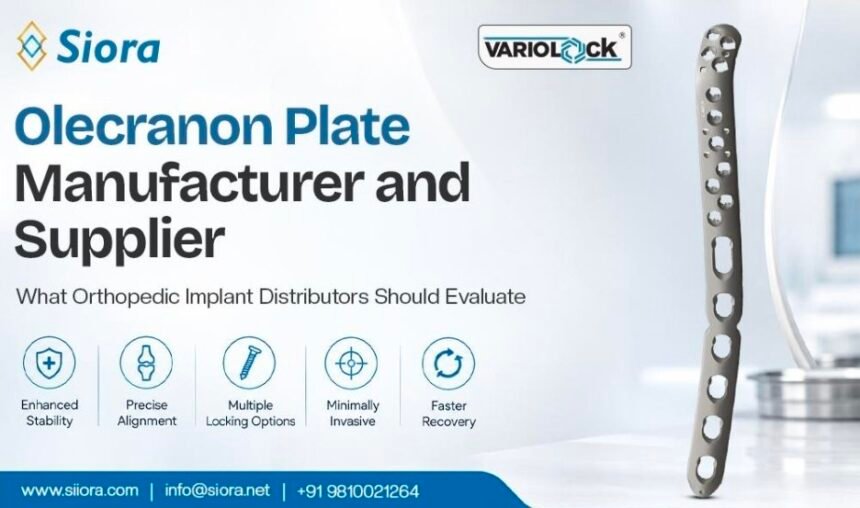
Finding a suitable orthopedic implant partner requires thorough investigation. And why not? It is about building a long-term partnership. From product range and manufacturing capability to pricing and certifications, all play an important role. This is particularly important when sourcing an olecranon plate, an implant used to stabilise fractures involving the bony prominence at the back of the elbow.
Understanding the Role of an Olecranon Plate
The prominent part of the ulna at the elbow is called the olecranon. Fractures in this region can affect elbow movement and require surgical fixation, depending on the injury’s severity and characteristics.
An olecranon plate is designed to hold the fractured bone fragments in an appropriate position while healing takes place. The shape, screw-hole configuration, and fixation process decide how these plates can accommodate different fracture patterns.
For distributors, understanding these basic features makes it easier to discuss product requirements with healthcare professionals and identify suitable implant systems for their markets.

Evaluate Product Quality and Design
Product quality is the primary factor a distributor must check before going further. Along with this, it is also important to check the product range, raw materials used to fabricate those products, and the manufacturing process consistency.
Olecranon plates may feature anatomical contours, locking screw options, and different configurations to accommodate varying fracture patterns. The appropriate design depends on the intended application and the surgeon’s preference.
Manufacturers should also provide clear product specifications, including dimensions, material details, compatible screws, and relevant instructions for use. Such information helps distributors understand the product range and communicate accurate details to their customers.
Check Certifications and Regulatory Compliance
Regulatory compliance is an essential part of sourcing orthopedic implants. Before entering into a supply agreement, distributors should verify the manufacturer’s applicable licences, certifications, and product registrations.
An ISO 13485-certified quality management system is an important indicator. This system confirms that the manufacturer promotes consistent manufacturing practices, supports regulatory compliance, and ensures consistent product quality.
Distributors should also review documentation such as declarations of conformity, where applicable, technical specifications, and traceability records.
Assess Manufacturing Capacity and Supply Reliability
If you are not getting timely supply, product quality is of no value. Distributors should therefore evaluate the manufacturer’s production capacity, inventory management practices, and ability to fulfil repeat orders.
Ask about standard lead times, minimum order quantities, packaging arrangements, and procedures for handling urgent requirements. A supplier having a balanced inventory and consistent manufacturing planning can prevent stockouts and ensure timely product delivery in emergencies.
Consistent communication also matters. Clear updates about order status and potential delays make inventory planning easier and support stronger relationships with hospitals and other buyers.
Review Pricing and Commercial Terms
Price affects profitability, but the lowest quotation is not always the most practical option. Distributors should compare pricing alongside product quality, documentation, delivery schedules, and after-sales support.
Above all, do check payment terms and company policies for wrong or damaged received products.
Consider Technical Support and After-Sales Service
Reliable technical support and prompt after-sales service make an orthopedic manufacturer stand out from the competition. A distributor must check necessary technical documentation, product handling guides, and IFUs.
Conclusion
Selecting an olecranon plate manufacturer and supplier requires a balanced assessment of product quality, regulatory compliance, production capacity, pricing, and customer support. For orthopedic implant distributors, these factors help identify long-term distribution partners.
Rather than making decisions based on price alone, distributors should verify documentation, request product details, and assess the supplier’s ability to meet ongoing requirements.