
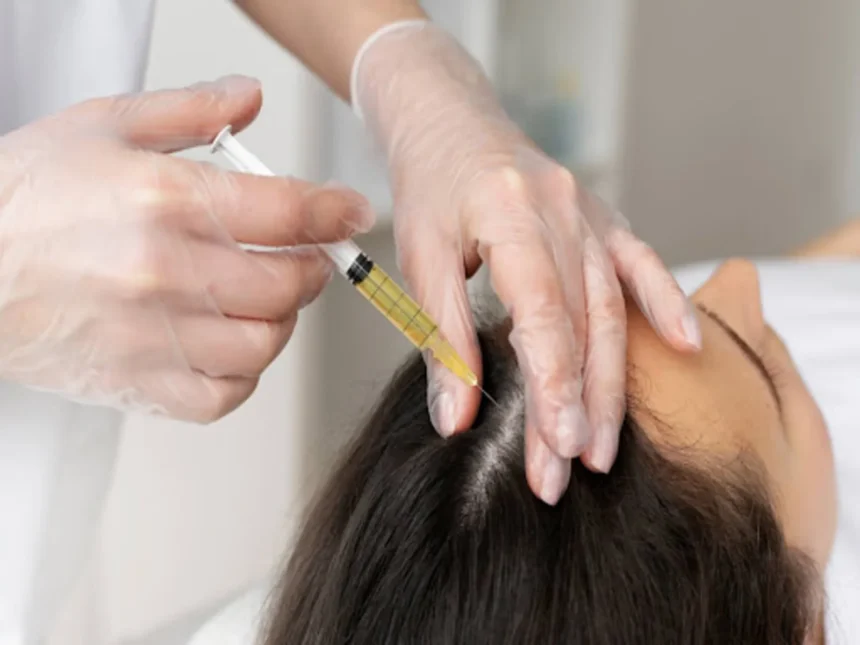
Platelet-rich plasma (PRP) therapy is a nonsurgical treatment for thinning hair and some types of hair loss. After a provider draws a small amount of your blood, a centrifuge separates the platelet-rich plasma from the other blood components. The plasma is injected into thinning areas of the scalp, and growth factors in the platelets help stimulate the hair follicles. Here are some aftercare tips following PRP for hair loss treatment:
Review Hair Products
Your scalp will likely be sensitive for a few days after PRP for hair loss injections. Before you return to your usual routine, check the labels on your shampoo, conditioner, and styling products. Some ingredients irritate the injection sites, and others leave residue on the scalp. If you use a topical hair loss treatment such as minoxidil, ask your provider when to resume it. Some products to avoid until your provider approves them include:
- Hair gels, sprays, mousses, and pomades
- Shampoos with sulfates, alcohol, or strong fragrances
- Hair dyes, bleach, and chemical relaxers
- Perm solutions and keratin treatments
- Topical hair loss medications
Wash Gently
Providers typically ask you to wait at least 24 hours before you wash your hair. Waiting to wash your hair gives the injected PRP time to interact with the surrounding scalp tissue. When you wash your hair for the first time, use lukewarm water and a mild shampoo. Hot water increases blood flow to the scalp and may increase swelling or tenderness. Your fingertips work better than your nails, and slow, light motions limit pressure on the injection sites while you lather and rinse. Pat your hair dry with a soft towel. If you use a hair dryer, keep it on a cool setting for the first few days.
Avoid Irritants
Some activities are likely to irritate the scalp during the first days after treatment. Strenuous exercise increases sweating, and sweat can carry bacteria into the injection sites. Providers usually advise avoiding workouts, saunas, steam rooms, and hot tubs for a few days. Direct sun exposure also stresses the scalp, so wear a loose hat if you spend time outdoors. A tight hat or helmet might press on treated areas, and a loose fit lets air reach the skin while it heals.
Some substances affect how your body responds to PRP. Alcohol thins the blood, and smoking reduces blood flow to the hair follicles. Avoiding these after treatment may help support circulation, platelet activity, and healing. Anti-inflammatory medications such as ibuprofen and aspirin sometimes interfere with platelet function, so ask your provider which pain relievers are safe to use. Your scalp often itches as it heals, but scratching or picking at the area raises the risk of infection. Contact your provider if you notice increasing pain, redness, or swelling.
Schedule PRP for Hair Loss
PRP for hair loss works over time, and results depend on consistent treatment and aftercare. Patients typically need a series of three sessions spaced four to six weeks apart. After you complete the initial series, many providers recommend maintenance sessions every six to 12 months. New hair growth typically becomes visible within a few months, but individual results vary. Talk with your provider about your hair loss history, and ask how PRP fits into your overall treatment plan. Schedule a consultation today to learn whether PRP is right for you.