




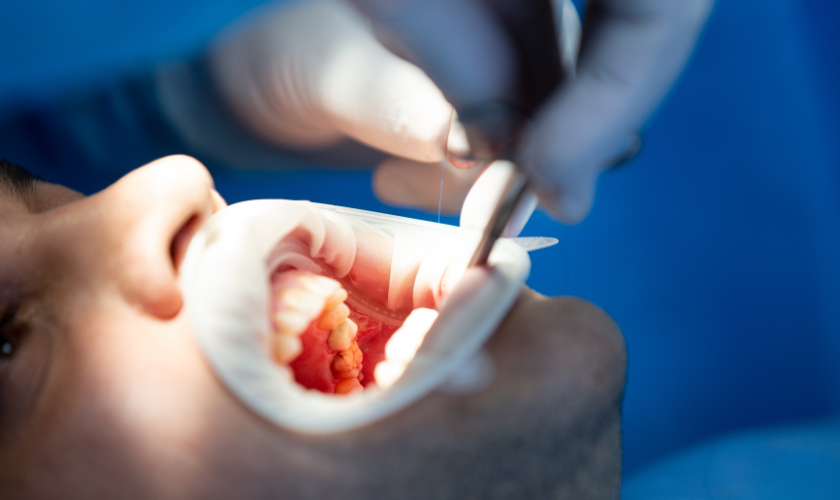
Recovery after oral surgery starts the moment you leave the dental office, and your early habits influence how smoothly the area heals. The surgical site needs protection while the tissue rebuilds. When you follow post-op directions closely, you lower the risk of infection, irritation, and prolonged soreness. Here are some simple recovery steps to manage swelling, take medication correctly, and adjust your diet:
Take Medication as Directed
Medication plays a direct role in how you feel after surgery. If your dentist prescribes antibiotics, finish the full course, because stopping early can leave bacteria behind. Read every label carefully to avoid doubling up on the same ingredient, and follow these steps:
- Take pain medicine with a small snack when the label suggests food.
- Avoid alcohol while taking prescription pain relievers or antibiotics.
- Use only the dose recommended, and do not share pills with others.
- Store medications out of reach of children and pets at home.
- Call the office if you notice rashes, breathing issues, or severe nausea.
Control Swelling and Pain
Swelling typically occurs after oral surgery, and it may respond well to cold therapy. When you place an ice pack on the outside of your cheek, the cold is used to narrow blood vessels and slow fluid buildup. As the days pass and swelling starts to drop, you can switch to brief warm compresses. Compresses are used to support circulation while the tissues repair.
Eat Soft Foods
Your mouth needs a gentler workload after oral surgery, so a soft-food plan helps protect the surgical area. Chewing hard or crunchy foods near the site can disturb stitches, which may also drive debris into the socket. Start with foods that need little or no chewing, and keep them lukewarm to avoid thermal irritation. Try using the opposite side of the mouth for light chewing while the surgical area rests.
When you stay hydrated with water and other dentist-approved drinks, your mouth stays less dry. Options like yogurt, scrambled eggs, oatmeal, and mashed vegetables slide over the gums without much pressure. This helps avoid bleeding, and healing tissues feel more comfortable.
Introduce one new food at a time so you notice any irritation, and move it away from the surgical side if needed. Avoid nuts, chips, and seeds until your dentist confirms that the site has closed enough for regular chewing. If you feel sharp pain while eating something new, stop that food for a few days, and return to softer options.
Watch for Bleeding
When you bite down gently on fresh gauze, steady pressure helps the clot stay in place and reduces active bleeding. Light oozing typically appears on the gauze after surgery, and it slows as a stable blood clot forms in the socket. Swap the gauze as directed until the pad stays mostly pink instead of bright red. Avoid spitting forcefully or rinsing vigorously.
If bleeding suddenly increases after it has slowed, investigate the issues. Biting into hard foods, brushing directly on the site. Using a straw can loosen the clot. Place clean gauze over the area, bite down with firm pressure, and keep it there for the full time your dentist recommended.
Schedule Oral Surgery Follow-up Visits
Follow-up visits give the dentist a chance to check the surgical site, and they also give you space to ask questions about home care. Stitches, bone, and gum tissue all heal on their own timeline, so in-person checks reveal whether the area is on track. When your provider sees early signs of irritation, they adjust instructions before small issues grow into bigger problems.