





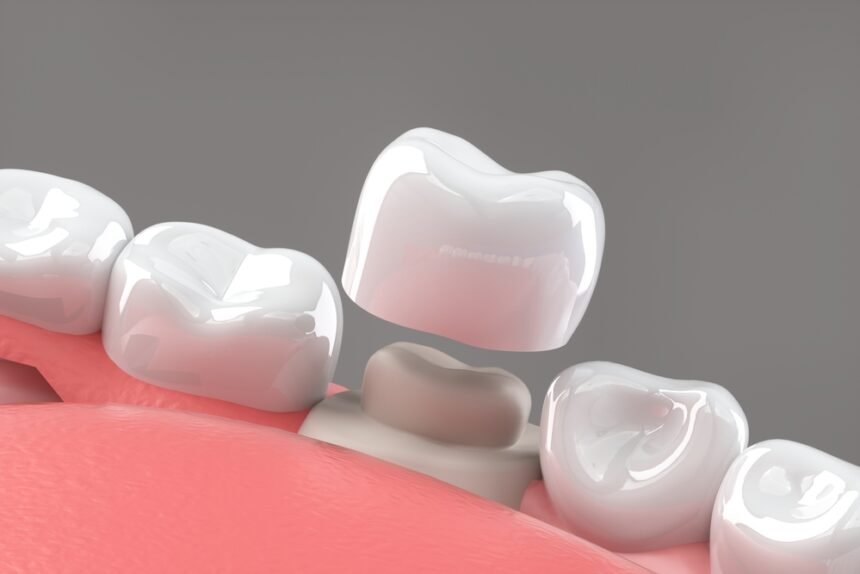
Dental crowns support teeth that need structural support, and they also change how a smile looks and feels. When a tooth has large fillings, fractures, or deep staining, a crown covers the visible surface like a custom cap. The goal is a tooth that blends with its neighbors. It also holds up under regular use.
Functional bite support
While aesthetics attract attention, the functional side of dental crowns influences everyday comfort and chewing. A crown takes on biting forces, and it spreads them across the tooth underneath. This helps protect weakened structure from further breakdown. When a tooth has cracks or large fillings, a crown stabilizes it so that chewing feels smoother and more predictable.
- They restore a tooth’s full biting surface, so food breaks down more evenly during meals.
- They help maintain proper spacing, and they reduce the risk of neighboring teeth tipping or drifting.
- They support more even pressure across the jaw, which helps lower the strain on specific teeth.
- They protect exposed or sensitive areas from temperature swings during hot or cold drinks.
New Material choices and fit
Different materials change how a crown looks and performs. Each one suits particular situations. Tooth-colored ceramics match surrounding enamel, and they reflect light in a way that keeps the restoration discreet. Metal-based options handle chewing forces in back teeth, and they often work well where appearance matters less than durability. The fit of dental crowns depends on careful planning and detailed lab work, and it affects both comfort and longevity. Dentists use a mold to capture the prepared tooth, and they use those records to shape the internal surface of the crown. When the crown seats fully with minimal adjustment, it supports a tight seal around the margins.
Daily care and longevity
Once a crown is in place, routine habits influence how long it stays stable and intact. Brushing and flossing around the margins help limit plaque buildup. That lowers the risk of decay forming at the edge where tooth and crown meet. Biting on hard objects stresses both natural enamel and restorations, so avoid chewing non-food items. This supports the long-term structure. Appearance often drives the first conversation about dental crowns. Function usually follows right behind. A crown wraps around the entire tooth, and it will have a different shape, length, and shade based on the tooth.
When one tooth looks shorter than the rest, a crown brings everything into a balanced line. Regular dental visits give the dentist a chance to monitor the crown, and they also provide time to check the bite and surrounding tissues. Small adjustments keep chewing comfortable, and they reduce uneven forces. These forces sometimes lead to wear or chipping. With steady maintenance, a crown remains a quiet part of daily life.
Book Dental Crowns Today
If you have a tooth that feels weak, looks worn, or interrupts your bite, a crown might bring it back into balance. Reach out to a dentist to talk through your options, and ask questions about materials. Decide whether a crown fits your goals for both function and appearance.