




Lower back pain is a common problem that can affect people of all ages, from office workers who spend long hours sitting to active individuals who regularly lift weights or perform physically demanding tasks. While occasional discomfort may improve with rest and gentle movement, persistent pain can interfere with work, sleep, exercise, and everyday activities. A slipped disc is another potential cause of lower back pain, sometimes accompanied by nerve-related symptoms such as tingling, numbness, or pain that travels down the leg.
The good news is that surgery is not necessary for every case of lower back pain or a slipped disc. Many people improve with conservative care, including physiotherapy, appropriate exercise, activity modification, and professional assessment. In Kuala Lumpur, understanding the available non-surgical options can help individuals make informed decisions about managing their symptoms and returning to normal activities.
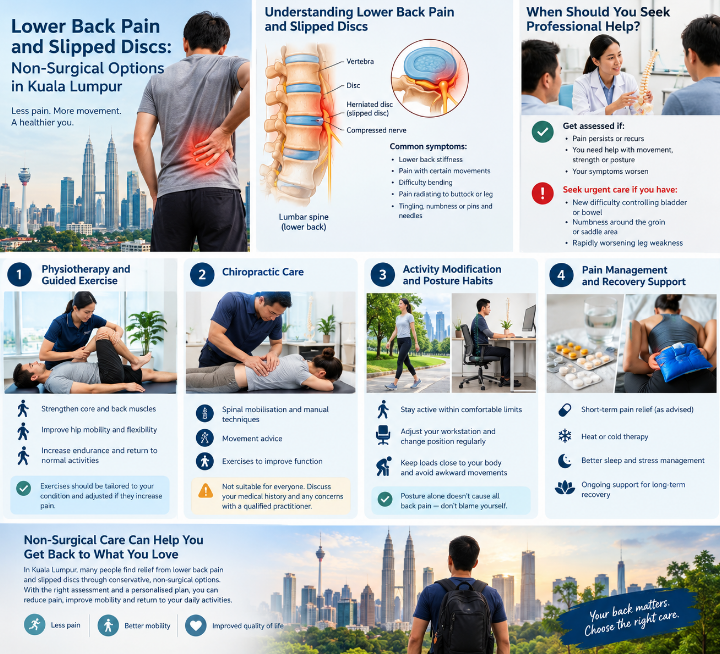
Understanding Lower Back Pain and Slipped Discs
The lower back, also known as the lumbar region, supports much of the body’s weight and allows the spine to bend, twist, and move. Muscle strain, poor movement patterns, prolonged sitting, and age-related changes can all contribute to discomfort in this area.
Between the bones of the spine are cushioning structures called intervertebral discs. These discs help absorb pressure and support movement. A slipped disc, more accurately described as a herniated or prolapsed disc, occurs when some of the disc’s inner material pushes through its outer layer. If the affected disc irritates or compresses a nearby nerve, symptoms may extend beyond the lower back.

Common symptoms include lower back stiffness, pain that worsens with certain movements, difficulty bending, and discomfort that radiates into the buttock or leg. Some people experience pins and needles or numbness, while others may have no symptoms at all despite changes visible on a scan.
Because several conditions can produce similar symptoms, a proper assessment is important before choosing a treatment approach.
When Should You Seek Professional Help?
Mild lower back pain often improves over time, but recurring or persistent symptoms deserve attention. A healthcare professional can review the patient’s medical history, assess movement, and determine whether further investigation is needed.
An assessment may include checking flexibility, muscle strength, posture, walking patterns, and neurological function. Imaging, such as an MRI, is not always necessary for uncomplicated lower back pain, but a clinician may recommend it when symptoms or examination findings suggest a more serious problem.
Seek urgent medical attention if back pain occurs alongside new difficulty controlling the bladder or bowel, numbness around the groin or saddle area, or rapidly worsening leg weakness. These symptoms can indicate serious nerve compression that requires emergency evaluation.
Non-Surgical Back Pain Treatment Options in Kuala Lumpur
Many people begin by exploring back pain treatment in KL to understand which conservative approaches may help relieve discomfort and improve mobility.
Treatment depends on the underlying cause, symptom severity, medical history, and individual goals. A suitable plan may combine several approaches rather than relying on a single technique.
1. Physiotherapy and Guided Exercise
Physiotherapy is commonly used to manage lower back pain and improve physical function. A physiotherapist can assess movement limitations and develop an exercise programme suited to the patient’s condition and abilities.
Exercises may focus on strengthening the muscles that support the spine, improving hip mobility, increasing flexibility, and building endurance. Gentle walking and gradual increases in everyday activity may also help people return to their normal routines.
Exercises should be adjusted if they cause significant or worsening symptoms. Patients with pain radiating down the leg may need a more individualised programme than those experiencing muscular discomfort alone.
2. Chiropractic Care
Chiropractic care may be considered as part of a conservative management plan for certain types of lower back pain. Depending on the assessment, care may involve spinal mobilisation, selected manual techniques, movement advice, and exercises designed to improve function.
Not every patient is suitable for every technique. People with suspected fractures, severe osteoporosis, progressive neurological symptoms, or other significant medical concerns require appropriate medical evaluation before manual treatment is considered.
Patients should discuss their symptoms and medical history with a qualified practitioner and understand the potential benefits and limitations of any recommended procedure.
3. Activity Modification and Posture Habits
Remaining active within comfortable limits is generally preferable to prolonged bed rest for uncomplicated lower back pain. Short walks, regular movement breaks, and gradual returns to usual activities can help maintain strength and confidence.
People who work at desks may benefit from adjusting their chair, screen height, and workstation arrangement. Changing position regularly is often more useful than trying to maintain one supposedly perfect posture throughout the day.
When lifting objects, keeping loads close to the body and avoiding sudden, awkward movements may reduce unnecessary strain. However, posture alone does not explain every case of back pain, and individuals should not blame themselves for developing symptoms.
4. Pain Management and Recovery Support
Depending on the diagnosis, a healthcare professional may recommend short-term pain relief to help patients remain active and participate in rehabilitation. Medication choices should take account of other health conditions, existing prescriptions, allergies, and potential side effects.
Heat or cold packs may provide temporary comfort for some individuals. These approaches are supportive measures rather than treatments that directly repair a herniated disc.
A sustainable recovery plan should focus on improving function, managing symptoms, and identifying activities that can be resumed safely.
Slipped Disc Treatment Without Surgery
For many patients, slipped disc treatment without surgery is a reasonable starting point when there are no emergency warning signs or progressive neurological deficits.
A conservative plan may include guided exercises, physiotherapy, education about symptom management, and gradual modification of activities. Some patients also benefit from selected manual therapies when these are appropriate for their condition.
The body can often reduce inflammation around an irritated nerve over time, and some herniated disc material may gradually shrink. Consequently, symptoms can improve even when the disc does not immediately return to its original shape.
Recovery timelines vary. Some people improve within several weeks, while others need longer-term rehabilitation. Persistent symptoms, significant weakness, or pain that continues to limit daily activities may require specialist review to discuss additional treatment options.
Surgery may be considered when conservative care has not provided adequate relief or when specific neurological problems make an operation necessary. The decision should be based on clinical findings, symptom severity, and the patient’s circumstances rather than on scan results alone.
Everyday Habits That Support Spinal Health
Healthy daily habits can complement professional treatment and support long-term mobility. Maintaining regular physical activity, building core and leg strength gradually, and getting sufficient sleep can contribute to general musculoskeletal health.
People who spend much of the day sitting can break up long periods of inactivity with brief walks or gentle movement. Those returning to exercise after an episode of back pain should increase intensity gradually rather than immediately resuming their previous training schedule.
Maintaining a comfortable body weight may also reduce the overall physical demands placed on the lower back. Smoking cessation, where relevant, is another positive step because smoking is associated with poorer spinal health and recovery outcomes.
No single lifestyle change guarantees that back pain or disc problems will disappear. The most useful approach is one that is realistic, consistent, and tailored to the individual’s needs.
Choosing the Right Care in Kuala Lumpur
When comparing treatment options in Kuala Lumpur, look for qualified healthcare professionals who provide clear explanations, assess symptoms carefully, and develop an individualised care plan. Ask about the purpose of each recommended treatment, expected progress, potential risks, and the circumstances in which a referral to another specialist may be necessary.
Be cautious of claims promising an instant cure, guaranteed disc repair, or the elimination of every symptom after a fixed number of sessions. Evidence-based care should acknowledge that recovery differs between individuals and that some conditions require medical or surgical assessment.
A good treatment plan should also include measurable goals, such as walking more comfortably, returning to work, improving mobility, or sleeping with less discomfort.
Conclusion
Lower back pain and slipped discs can disrupt daily life, but surgery is not the only option for many people. Physiotherapy, guided exercise, appropriate chiropractic care, activity modification, and professional pain management may help reduce symptoms and restore function.
The most suitable approach depends on the cause of the pain, the presence of nerve symptoms, and the patient’s overall health. By seeking a proper assessment and following an individualised recovery plan, people in Kuala Lumpur can make informed decisions about conservative care and take practical steps towards better spinal health.