






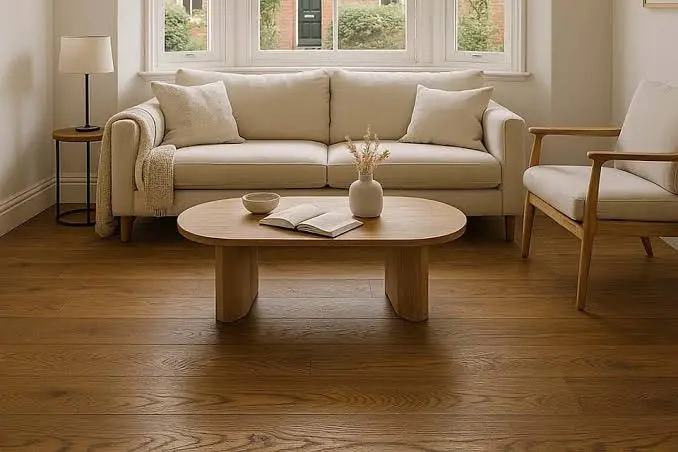
Wood flooring offers diverse tones, natural grain patterns, and finish options, so it complements various interiors. With different styles available, homeowners can select options that add warmth and character to heritage properties or reinforce clean lines in contemporary rooms. Here are a few wood floor styles to enhance your home’s aesthetic:
Wide-Plank Modern Minimalist
Wide-plank flooring can enhance your interior’s aesthetics by creating a quiet architectural foundation. This style has a low-sheen finish, clean lines, and subtle color variation. It also features wide hardwood boards; this helps create an open visual effect that complements modern minimalist aesthetics.
Fewer seams between the wide planks keep the wood’s natural grain and character more visually continuous across the floor. The boards’ long edges also help guide the eye through the room, and they create a more continuous visual direction. When you orient this wood flooring style toward a hallway or major architectural feature, it can reinforce your home’s visual flow. It also helps make the layout feel more intentional.
Elegant Linear Grain
Linear grain flooring features straight, elongated grain lines that follow the length of each plank. Unlike flooring with pronounced cathedral patterns, the grain stays more consistent across individual boards. This can make the flooring look more uniform, but it still preserves the natural variation found in real wood. Subtle differences in grain and tone keep the surface from looking completely uniform. The linear pattern can complement interiors with clean lines and simple architectural details.

Light Maple Hardwood
Light maple hardwood offers a clean and understated aesthetic that suits modern and contemporary interior spaces where simplicity and precision matter. This flooring features a pale cream-to-light-honey color and a tight, relatively uniform grain. The combination creates a clean visual base; its neutral look works with diverse interior styles.
The fine, straight grain on maple hardwood creates a more uniform surface than flooring with pronounced knots or varied patterns. The wood’s pale color can also make differences between adjoining planks less noticeable, so there’s greater consistency across the floor. When used throughout adjoining rooms, light maple helps maintain a cohesive appearance without strong color or grain variation. It can also brighten interior spaces with limited natural light, making it practical for urban residences and compact layouts.
Scandinavian Pale Blonde
Scandinavian flooring typically uses pale blonde tones, low color variation, and matte finishes. These characteristics create a light, understated appearance without relying on high-contrast grain or glossy surfaces. The pale-warm neutral color adds brightness, but it avoids the strong yellow or orange cast associated with ambered finishes. Pairing pale wood floors with light walls and restrained furnishings can maintain a consistent color palette throughout the space.
Install Wood Flooring Today
The right flooring style helps create the desired interior aesthetic by balancing color variation, grain, and tone. Additional styles, such as dark-toned hardwoods or hickory, offer deeper tones and more pronounced natural grain variation. Different wood species also vary in durability and hardness, so the right option depends on how you’ll use the space. Contact a reputable hardwood flooring expert today to explore styles that complement your home’s interior design.