






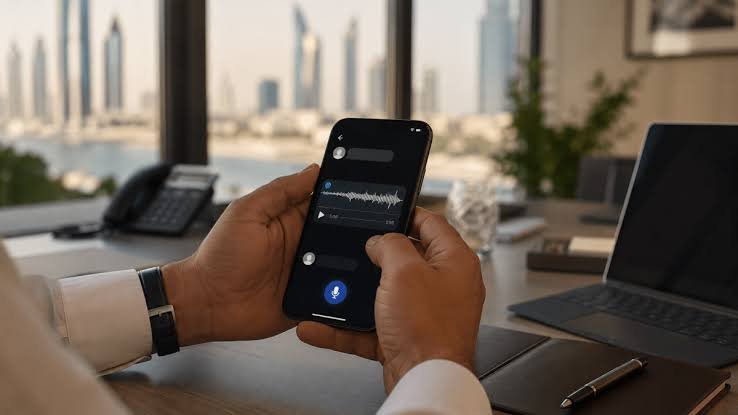
Social media applications like WhatsApp and other business communication apps have become an integral part of professional and personal lives. Alongside this, Email apps have also been a handy source of communication that is widely used in the UAE. WhatsApp chats, voice mails, and text messages can be used as a source of evidence in UAE courts.
They accept electronic messages, emails, and voice notes as may be used as sufficient evidence in court. However, they are acceptable under specific specifications. Ultimately, courts decide whether to accept or reject the evidence. Arabic translation is required for submission to court.
The UAE courts will accept e-evidence such as WhatsApp texts, videos, emails, voice mails, screenshots, chat recordings, digital files, audio, proof of online transactions, digital documents, and much more under applicable laws. Dubai-based legal professionals fully understand the significance of E-evidence in litigation cases and can offer useful legal assistance on how courts will evaluate evidence.
UAE Federal Laws for accepting Electronic Evidence in Courts:
E-evidence is recognized under the UAE Federal Laws but with certain legal requirements and considerations. The digital communication needs to display the facts of the case, correctness, and relevance. Credibility is checked.


In some cases, messages of threats, pressure, and disputes become robust and acceptable evidence for UAE courts. Furthermore, e-bank receipts, E-invoices, purchase orders, and banking transactions can also be used as evidence by UAE courts.
UAE courts will ensure the evidence is reliable, original, and relevant to the case. In today’s modern world, reliance on WhatsApp conversations, voicemails, messages, and emails has increased. Several civil, criminal, and even commercial cases rely on E-evidence. Nowadays, a lot of communication takes place informally over chat applications without formal or written contracts.
This has provided UAE courts with better results and saves time. Well-versed Legal representation in Dubai can guide you on resolving disputes via evidence based on WhatsApp chats, emails, or recordings.
Digital Evidence requires Arabic Translations:
There is a proper criterion for E-evidence to be used as evidence, and therefore authenticity and verification are needed. The Arabic translation is required before submitting the proofs to the UAE courts. They will process the evidence if the sender and receiver are genuine and verified. There should be no changes to the chat or the content of the main topic. This is done to avoid manipulation.
Full chat history needs to be submitted along with attachments, voice notes, audio, and videos, if any. Besides, screenshots, metadata, and timestamps are also taken into consideration for verification.
Additional Support from UAE Federal Laws:
Over time, there have been groundbreaking changes to the current laws and regulations to keep in line with the modern-day world. There has been evolution in IT and cybersecurity needs. A great number of UAE federal laws accept digital evidence, especially in civil, criminal, and commercial cases and lawsuits. Some of the prominent Federal laws that recognize WhatsApp are UAE cybercrime laws, Federal Evidence Law, Electronic Transactions Law, and Civil Procedure laws.
Federal Decree-Law No. 34 of 2021 on Countering Rumors and Cybercrimes addresses the evidential force of electronic evidence in Article 65. The rules applicable to a particular dispute also depend on the type of proceedings and other relevant legislation.
The above-mentioned law allows UAE courts to rely on digital proofs and records. Seeking legal guidance from a professional lawyer and advisor to benefit from UAE laws. They have a better understanding of reliability, authenticity, and relevance of the evidence.
Involvement of IT department and Forensic Experts:
Technical or forensic experts may be appointed where electronic evidence requires specialist examination, particularly when its authenticity or integrity is disputed. They will assist courts in looking into the matter.
Usually, forensic experts and IT specialists are authorized experts and are related to government entities in the UAE. In addition, they will analyze and review the evidence submitted and ensure its usefulness, authenticity, and relevance. They might choose to reject edited messages, emails, or screenshots.
WhatsApp Chats Evidence in Civil, Criminal and Commercial Cases:
It is an integral form of evidence in civil, commercial, and criminal cases taken to UAE courts. In the digital world, there is heavy reliance by law enforcement agencies and prosecutors on E-evidence from WhatsApp chats, messages, recordings, screenshots, and audio.
Chat history is also a strong source of evidence to reveal the truth. It can also assist in investigations. Threats and intimidation can change the direction of the case. UAE criminal courts accept digital messages, chats, recordings, and emails as proof.
Additionally, criminal cases like harassment, defamation, and human trafficking rely on evidence from electronic media. The images, screenshots, transactional requests, and direct admissions are a useful part of factual evidence. UAE cybercrime laws empower law enforcement agencies and other concerned authorities to extract, verify, and review digital evidence. As a result, they are used in UAE courts.
UAE police may obtain evidence directly from electronic devices and digital platforms like WhatsApp. The UAE authorities can submit official requests to service providers to provide them with relevant data. However, this carries detailed legal procedures and legal requirements.
Emails Used as Evidence in Litigation and Civil Cases:
In addition, Emails are considered a more reliable form of evidence in the World. Business disputes and conflicts rely on emails for resolution. Emails are one of the most authentic sources of evidence, especially for work, real estate, employment, and family-related disputes.
Emails are used in negotiations, agreements, service promises, product delivery, and meeting deadlines. Therefore, email is easy to compare and authenticate due to its nature. It holds special importance in the UAE legal system.