





Professional deck repair allows you to address issues like damaged boards. Repairs are customized to fit your needs, and contractors may recommend replacements for widespread damage. Some handymen also offer protective sealants and finishes to improve a deck’s weather resistance and curb appeal. Here are a few tips for repairing worn or weathered deck boards:
Get a Thorough Assessment
Before repairs begin, experienced handymen visit your site for a thorough inspection. Homeowners should remove furniture and debris from the deck, so the handymen have a clear place to work. An inspection helps identify the scale of damage and the scope of required repairs.
Professional deck repair contractors often look for rot, splinters, cracked wood, and loose boards. They also check for signs of insect damage and moisture issues around fasteners and board joints. If supporting joists are affected, contractors schedule structural repairs before addressing the damaged boards. A thorough evaluation lets contractors recommend targeted solutions; these include fixing loose railing posts, joist rot, and shifted footings.
Make Preliminary Fixes
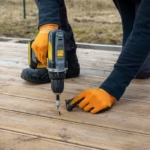
When structural repairs aren’t needed, contractors usually start by making preliminary fixes to secure loose boards and hardware. They hammer down raised nails or drive protruding screws flush with the wood surface. Severely rusted or broken fasteners are replaced with suitable exterior-grade options. Contractors also check connections for movement, and they tighten loose screws where the wood remains sound.


Review Repair Options
The appropriate repair method depends on the location and severity of the damage. Deck boards may need minor repairs when the underlying wood is strong. Gouges and small cracks usually require filling with exterior wood filler or acrylic caulk. Sanding makes sure the repair is flush with the rest of the board; this creates a smooth, seamless transition once the filler cures.
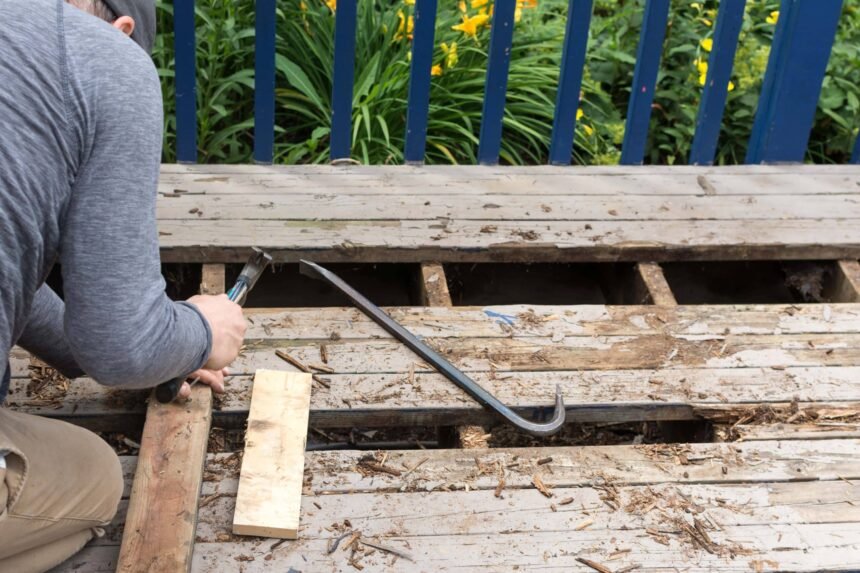
For completely rotted sections or wide cracks, contractors cut out the damaged wood and replace it using boards that match the existing deck. They replace failed fasteners with new corrosion-resistant screws. Handymen may also recommend:
- Board replacement to address extensive rot, splitting, or structural damage
- Joist replacement to fix damaged supports beneath affected boards
- Edge trimming to remove small sections with localized deterioration
- Board realignment to correct shifted or uneven boards and restore consistent spacing across the deck
- Joist sistering to reinforce weakened or damaged supports using new boards alongside existing joists
Apply Finishing Touches
Deck repairs often include finishing touches, such as sanding, sealing, and painting. Contractors may sand the surface with a pole or palm sander and appropriate-grit sandpaper; this smooths splintered areas and rough grain. Some contractors use a water-absorption test to verify the deck is dry before applying weather-resistant stain, paint, or sealant. These coatings help protect boards from UV and moisture damage.
Schedule Deck Repair Today
Repairing damaged decking requires experienced handymen who know the steps involved and have the necessary tools. Early repairs help prevent damage from escalating into major failure or accidents. Regular inspections can catch surface wear and weathering, and they let you schedule prompt evaluations. Speak to a handyman today to schedule professional deck repair.